Digital Marketing Strategy
How Can Businesses Build a Reliable Lead Funnel?
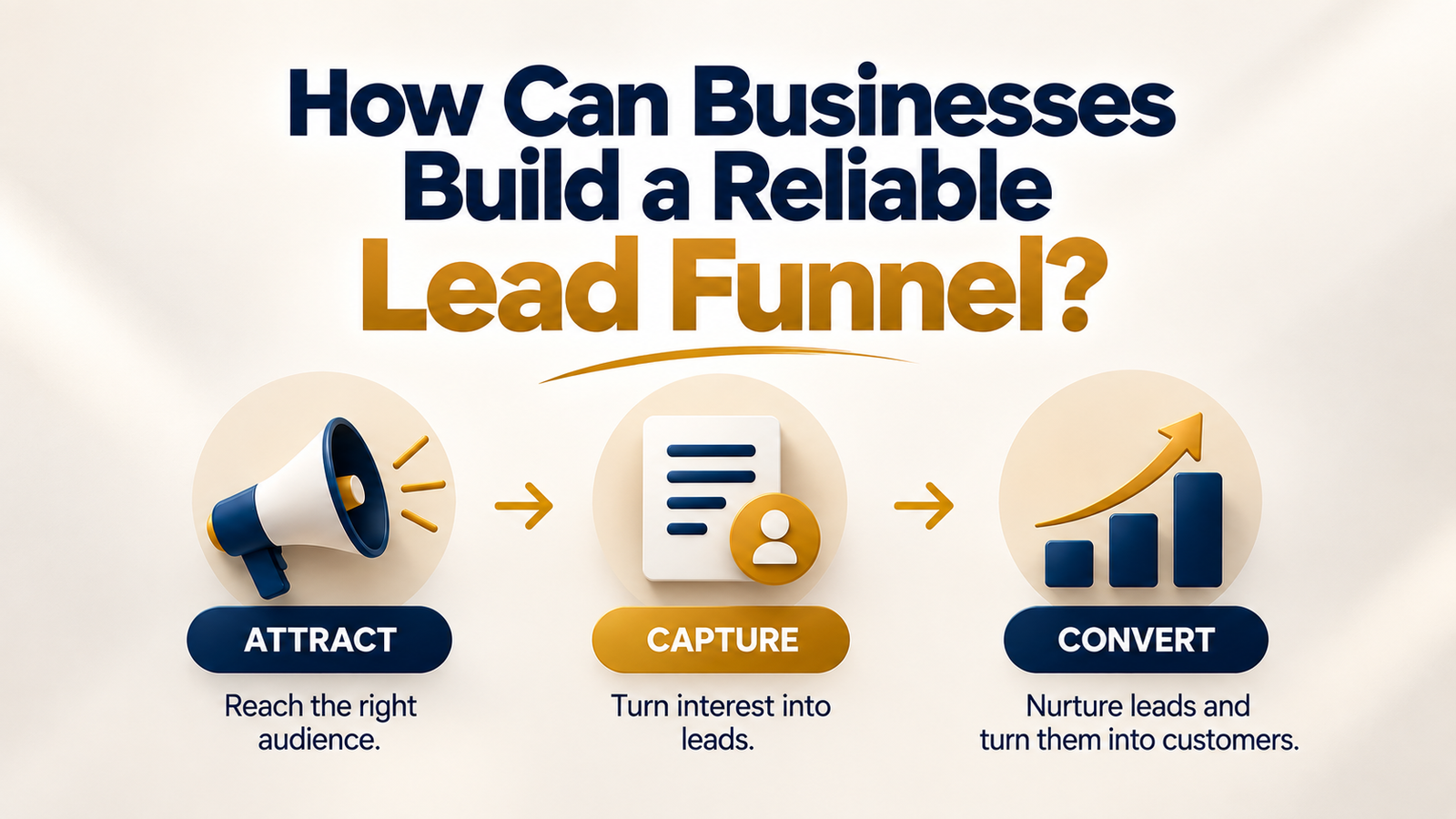
A reliable lead funnel does four basic things: it brings the right people in, gives them a reason to contact you, follows up while they're still interested, and helps you understand where each lead came from.
Miss one of these steps and your enquiries can become unpredictable. You might have a great week, followed by ten quiet days, without really knowing what changed.
The good news is that building a lead funnel doesn't have to be complicated.
What a Funnel Actually Is
Forget the complicated diagrams with six different stages and colourful arrows.
A funnel is simply the journey someone takes before becoming a customer. They might see your post or ad, become interested, send a message or fill out a form, talk to you, and eventually decide whether to buy.
People will drop off at different stages. That's normal.
The important thing is finding where you're losing the most people. Fix that part first. There's little point in improving everything else if most potential customers are already disappearing at one particular stage.
Start With the Right People
It's easy to get caught up in reach, views, and follower numbers. But those numbers don't always tell you whether you're attracting potential customers.
Ten people who genuinely need your service can be more valuable than a hundred people who will never buy from you.
Start by getting clear about who you actually want to reach. What problem are they dealing with? Where do they look for solutions? What platform do they use?
For example, a coaching centre in a town like Kaithal may get more useful enquiries from local parents searching on Google and finding a well-managed Instagram page than from showing a broad ad across half of Haryana.
If you're planning to run ads, our Meta Ads budget guide can also help you understand how much you may need to spend before the numbers become useful.
Give People a Reason to Contact You
Getting someone to like a post is easy. Getting them to share their phone number or start a conversation takes more trust.
That's why you need to give people a reason to take that next step.
It could be a free consultation, demo class, price list, quick audit, sample, or something else that genuinely helps them.
Then look at your form.
This is one of those small things that can quietly hurt a funnel. If you only need someone's name and number, don't ask for ten different details. Every additional field creates another reason for someone to leave.
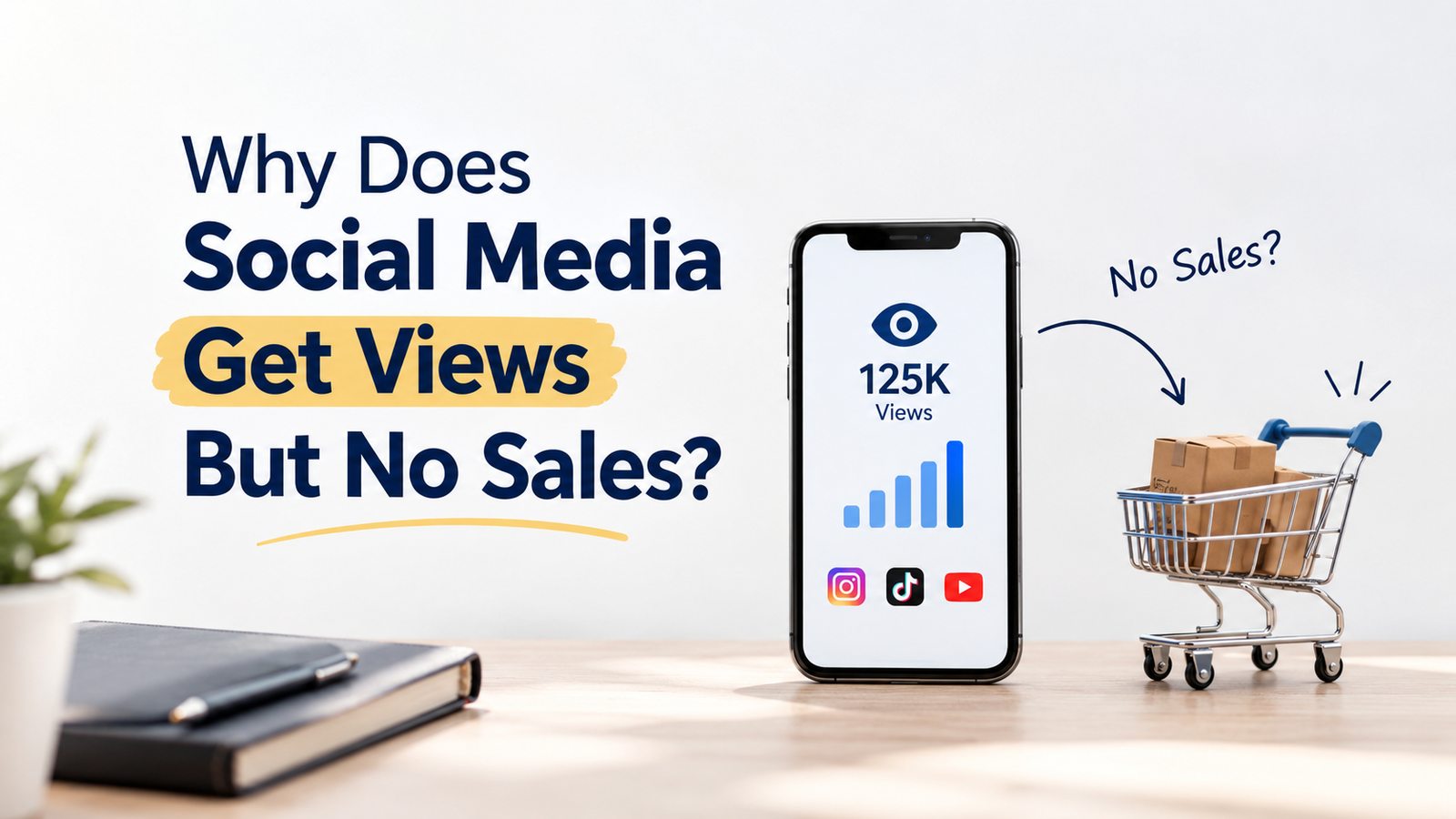
And if your content is getting attention but hardly any enquiries, check this part before assuming the content itself is the problem. We covered this in our article on why social media can get views without generating sales.
Reply While They're Still Interested
Lead response time matters more than many businesses realise.
Someone might fill out your form at 6 PM because they're interested right now. If they don't hear from you until the next afternoon, they may already have contacted two other businesses.
During working hours, try to respond within the hour whenever possible.
Use the channel your customers actually prefer. In India, that often means WhatsApp or a phone call rather than email.
Your first response doesn't need to be a long sales message. Thank them, confirm what they're interested in, and ask one simple question to understand what they need.
A short, genuine reply usually feels much better than a long copy-pasted paragraph.
Be Patient With People Who Aren't Ready
Not every lead is ready to buy immediately.
Someone might need a week to decide. Someone else might take a month.
Calling these people "cold" and forgetting about them is an easy mistake to make.
If your only follow-up message is, "Are you ready to buy?", most people will probably stop responding.
Instead, stay useful.
You could share a helpful tip, follow up with a customer result, answer a common question, and then check in again later.
Depending on your business, WhatsApp broadcasts, email, or retargeting ads can help you stay in front of people who showed interest but weren't ready yet.
You're not trying to pressure them. You're simply making sure they remember you when the timing is right.
Track Where Every Lead Comes From
This is one of the simplest parts of a funnel, yet many small businesses don't do it consistently.
A new enquiry might come from Instagram, Google, WhatsApp, a referral, or an ad. If you don't record the source, you won't know which channels are actually bringing useful customers.
Use UTM tags to separate your campaigns and record the source of every lead in one simple spreadsheet.
Google's Analytics Help documentation also explains how traffic sources are reported, which is worth understanding before setting everything up.
Once you start tracking sources properly, you can look beyond the number of leads and see which channels are bringing people who actually become customers.
Where Do Lead Funnels Usually Leak?
When a funnel isn't producing good results, the problem is often somewhere along the journey.
Maybe the offer isn't clear.
Maybe the form asks for too much information.
Maybe the follow-up is too slow.
Maybe every lead is being handled in exactly the same way.
Or maybe nobody is looking at the numbers, so the same problem keeps happening month after month.
Most of these problems don't require a bigger advertising budget.
They require someone to actually go through the journey a lead takes and ask:
Where are people getting stuck?
Once you find that point, you can work on fixing it.
FAQs
What is a lead funnel in simple words?
A lead funnel is simply the path that turns a stranger into a potential customer and, eventually, a customer. They discover your business, become interested, contact you, receive a response, and decide whether to buy. Some people leave at each stage, and the goal is to reduce unnecessary drop-offs.
How long does it take to build a lead funnel?
A basic funnel with one offer, one landing page or form, and a follow-up process can be set up in around two weeks. Making it reliable takes longer because you'll need to learn from real enquiries and improve the weak points over time.
Do small businesses really need a funnel?
If enquiries are an important part of how your business grows, even a simple funnel can help. It doesn't have to involve complicated software. An Instagram post that sends someone to WhatsApp, followed by a same-day response, is already a basic funnel. The goal is simply to make sure interested people don't disappear because nobody knows what should happen next.
Why am I getting leads but no sales?
There could be several reasons. The leads may not be the right fit for your offer, or the follow-up may be too slow or unclear. Before changing your entire marketing strategy, check where those leads are coming from and how quickly they're being contacted.
Final Thoughts
A lead funnel isn't a piece of software you buy once and forget about.
It's a process.
Bring the right people in. Give them a clear reason to contact you. Make it easy for them to reach you. Respond while they're still interested. Stay useful to people who aren't ready yet, and keep track of what's actually working.
You don't have to fix everything at once.
Find the weakest part of your funnel, improve it, and then move on to the next one.
If you want to understand how this could work for your business, you can explore our lead generation services or get in touch with Extradigitz for a free funnel review.
Ready to grow?
Ready to put this into action?
Book a strategy call and we'll help you apply it to your business.